

Wisdom Library
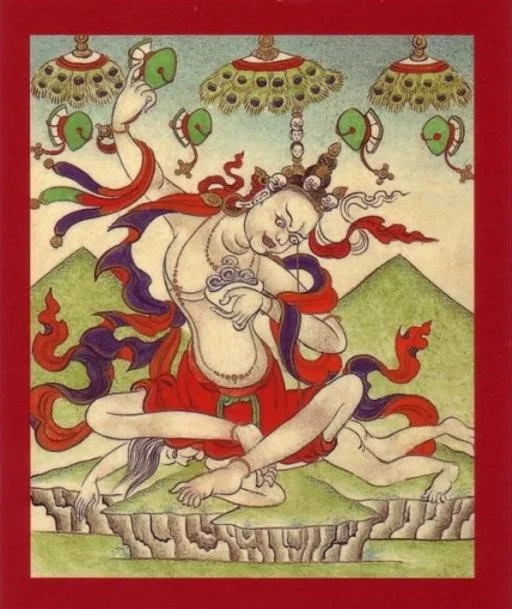
The Boat of Kanha: The Mahāsiddha Kṛṣṇācāryapāda and His Song of the River
Twelve centuries ago, in the green delta where the great rivers of Bengal braid themselves together before they pour into the sea, a yogin sang a song about a boat. He had walked on water and sunk beneath it. He had pressed his foot into rock and seen royal canopies float above his head. He had been scolded by ḍākinīs, humbled by a weaver, refused by a girl beneath a lychee tree, and brought to the threshold of death by his own pride. And at the very end, with seven days left to live, he sang of crossing the ocean of existence, not by miracle, but in a small boat rowed by five Buddhas, with emptiness and compassion as his two companions and his own mind at the helm.
His name was Kṛṣṇācāryapāda, the Black Master, called Kanha or Kāhna in the old tongue of Bengal and Odisha. He stands among the Eighty-Four Mahāsiddhas as one of the most human of them all: brilliant, restless, gifted with every power, and for most of his life a stranger to the one thing his powers could not give him. His story is the story of how a great practitioner was slowly, mercilessly, tenderly stripped of everything that was not the nature of mind. His song is what remained.
What follows is his story, a renewed rendering of his song from the Caryāgīti, and a commentary that reads the song as it was meant to be read in the Secret Mantra: as the inner river of the central channel, which is also the river of life itself; as the two ladies of the side channels; as the five Tathāgatas who row; as the senses left undisturbed in their own place; and as the body and the world, the Magical Net, allowed simply to drift.
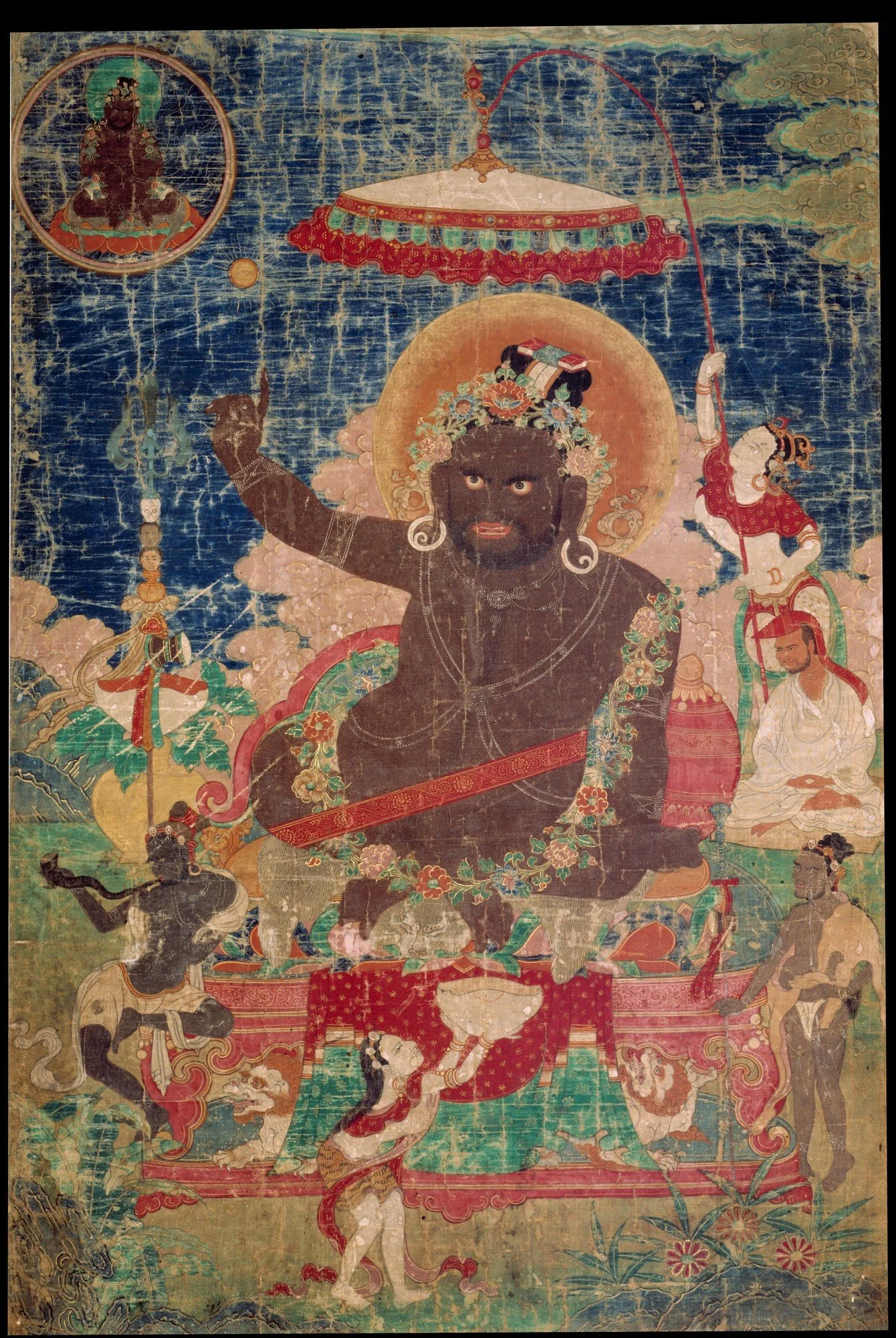
The Expanse of Enlightened Intent: Dgongs pa from the Sanskrit Sūtras to the Treasures of the Ḍākinīs
At the close of the Ḍākinī Ngöndro, the treasure known as the Excellent Path of Great Bliss, the Tertön Gyurmed Ngakrabtsal tells us how the text came into the world. He does not say that he composed it, nor that he found it beneath a rock or within a lake. He says that in the uncontaminated expanse of wisdom, in the very instant that awareness’s own radiance arose unceasing and just as it is, he set it down with certainty from the expanse of intent, dgongs pa’i klong nas.
Everything turns on that one word: dgongs pa. It is usually translated as “enlightened intent”, sometimes as “realisation”, “wisdom mind”, “intention”, “contemplation” or “the state”. None of these is wrong, and none is enough. The word has travelled a long way to reach that colophon. It began in the Sanskrit of the sūtras as the hidden purpose behind the Buddha’s words. It deepened in the Mahāyāna into a whole science of reading. It became, in the tantras of the Secret Mantra, the secret meaning that only the initiated can hear. In the Great Perfection it was transformed once more, into the living realisation of Samantabhadra himself. And in the terma tradition it became the vault in which the teachings were hidden for centuries, and the expanse from which they are drawn again.
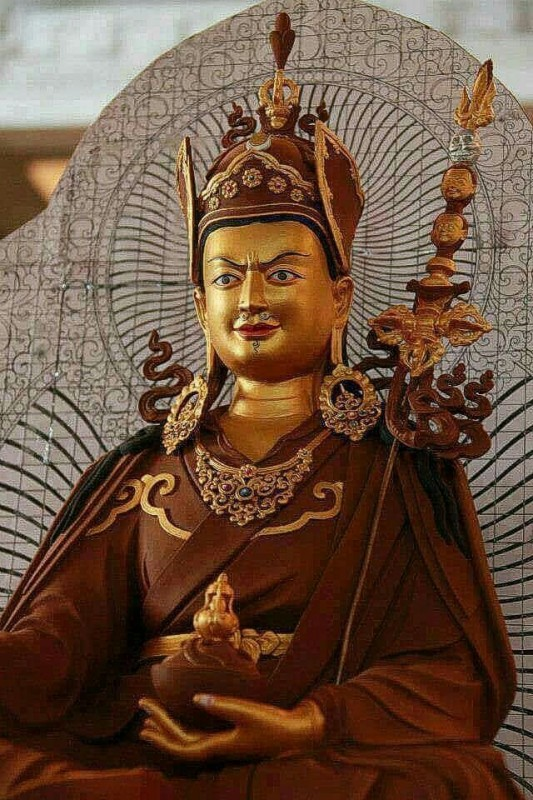
The Nine Garments of the Lotus-Born
Look carefully at any image of Guru Padmasambhava, the Lotus-Born, and you will notice something that sets him apart from almost every other figure in the sacred art of Asia. He does not wear one robe. He wears many, one over another, layer upon layer. Beneath, a garment of pure white. Above it, a deep blue gown. Over that, the patched red and saffron shawl of a monk. And over all of these, a heavy cloak of maroon brocade, the mantle of a king. On his head sits a lotus hat crowned with a vajra and a peacock's feather. In the crook of his arm rests a trident-staff, and hanging from its prongs are nine iron rings.
A monk does not dress like a king. A king does not dress like a yogin. A yogin of the charnel grounds does not wear the patched robe of the monastery. Yet here, in a single body, all of these are worn at once, and none of them contradicts the others. The tradition has always understood this as a teaching in itself: the Lotus-Born has mastered every vehicle of the Dharma, from the first vow of renunciation to the summit of the Great Perfection, and he wears them all because he can speak to every being in the language that being understands.
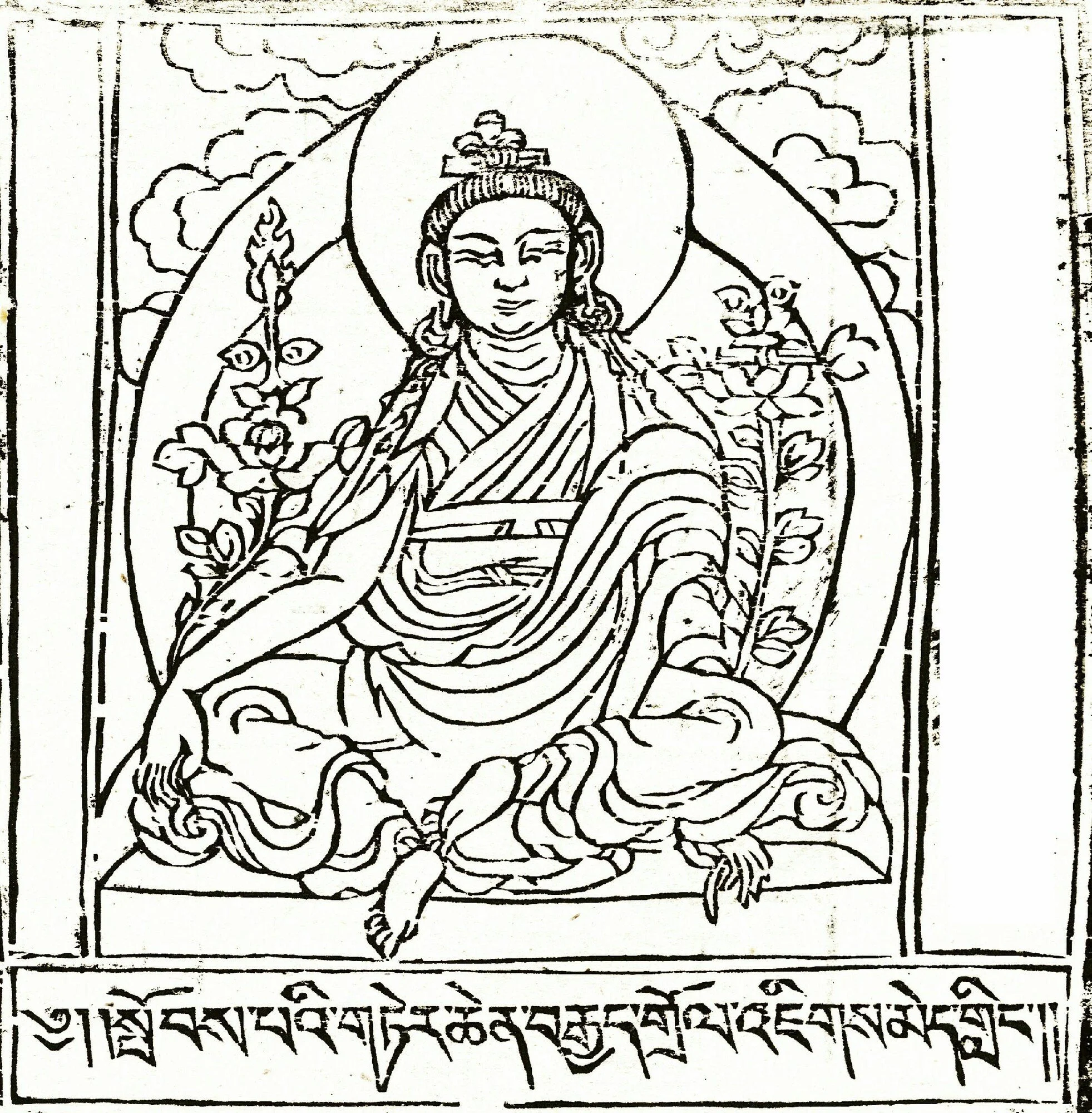
Skull Fragments: on the Root Tantra of the Vidyādharas
Among the many texts of the Heart-Essence of the Vast Expanse, few are so short and none is so foundational as the Root Tantra. It belongs to the teachings on history that bring certainty. Rigdzin Jigme Lingpa received it, as he received the whole cycle, from the ḍākinī of the all-pervading expanse, in symbols that he could decode. What he set down is not a sādhana to be chanted. It is not a commentary to be studied line by line. It something rarer: a Root Tantra in miniature, in which the entire architecture of Secret Mantra, from the ground of buddha-nature to the final seal of the treasure, is folded into a few dozen verses.
As with all texts of the Luminous Great Perfection, the title itself is a teaching. A skull fragment is a piece of the skull-cup, the vessel that in the charnel grounds holds the amṛta of the herukas. It is small, broken off, and yet it is of the same bone, the same substance, as the whole. So it is with this text. It does not present itself as one of the vast tantras of the eight sādhana classes that it describes. It is a fragment of them, a shard of the vessel, and yet whoever truly receives it holds something of the essence of what the whole vessel was made to contain.
Natural Liberation of Suffering
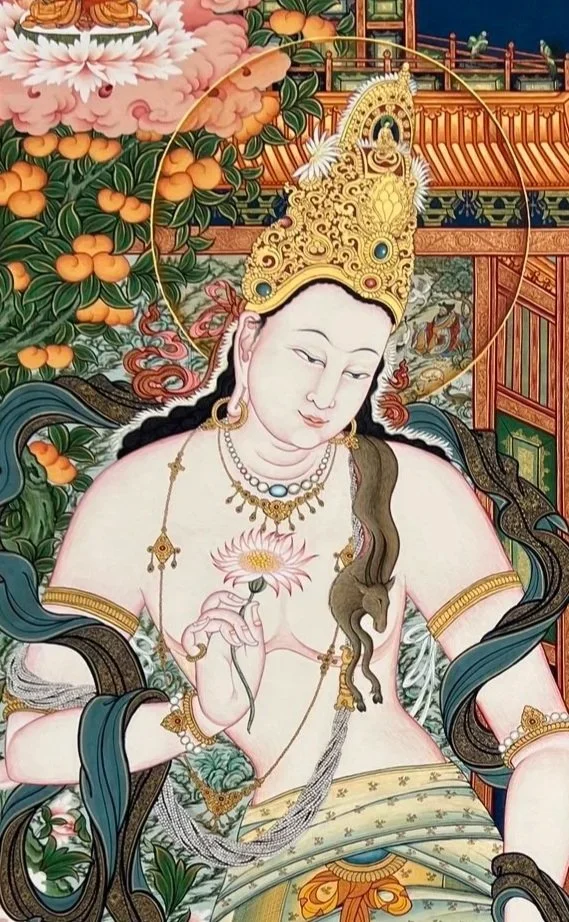
There are teachings that are studied, and there are teachings that are received the way a seed receives the rain. The Secret Practice of the Great Compassionate One, known in Tibetan as Dukngal Rangdrol, Natural Liberation of Suffering, belongs to the second kind. It is a doorway, opened in the very heart of the Longchen Nyingthig tradition, through which the boundless compassion of all the Buddhas may be met face to face.
Its name holds its whole promise. Suffering is not fought, not suppressed, not endured. It is liberated, and liberated naturally, rang drol, by itself and in its own place, the way frost vanishes when the sun has risen.
The same word, rang drol, runs like a golden thread through the whole literature of the Great Perfection. Thoughts are self-liberated, appearances are self-liberated, and here suffering itself is self-liberated, because in the light of awakened compassion it is found not to have a solid core.
Ascending the Mountain: The Stages of the Stageless
The Great Perfection does possess detailed elaborations of ground, path and fruit, and they are far more articulated than is commonly supposed. They are not stages of rigpa itself, which neither grows nor diminishes, but stages of its recognition, its unfolding as display, and its final resolution into itself. The most complete of these elaborations is the scheme of the eleven vajra topics, set out in the Pearl Necklace Tantra, unfolded in Vimalamitra's great commentary, and brought to perfection by the Omniscient Longchen Rabjam in the Treasury of Words and Meanings and the Treasury of the Supreme Vehicle.
The Ocean of Wisdom and the Eleven Faces of Compassion
The dhāraṇī that begins namo ratnatrayāya and flowers into dhara dhara, dhiri dhiri, dhuru dhuru is genuinely the heart-dhāraṇī of the Eleven-Faced Avalokiteśvara, attested in Sanskrit, Chinese and Tibetan, and it is far older than the Chinese additions that are sometimes suspected of having produced it. It is one of the oldest living witnesses we possess to the moment when the Great Vehicle began to speak in the language of mantra.
The Treasures of the Sky
A small child looks up into the sky. He cannot yet read. He does not know the shape of a single letter. And yet there, suspended in the blue as if the air itself were a library, float long yellow pages, the narrow unbound folios of Tibetan pechas, and across them run lines of red script. The small boy — named at the time Rigzin Dorje — strains to make them out. They shimmer at the edge of meaning, visible and unreadable, near and utterly beyond reach, like a word on the tip of the tongue that belongs to another life.
Our Root-Teacher has described the above memory of his earliest childhood. To one who knows the tradition, the image is unmistakable. Yellow scrolls, shog ser, are the very paper on which the treasures are written. Red is the colour of the ḍākinīs who guard his treasures. A child who sees such pages in the sky before he can read is being shown, long before he can understand it, what he will one day be asked to decipher. The treasure is already there. It waits only for the one who can read it.
This essay is about that waiting, and about that reading. It is about terma, gter ma, the treasures: teachings, objects and realisations concealed in the elements, in the sky and in the depths of mind by Guru Padmasambhava and his consort Yeshe Tsogyal, and revealed at the appointed time by those destined to find them, the tertöns, the treasure revealers. It is about how this tradition, which seems so strange to modern ears, is in truth the natural expression of how the Dharma has always come into the world: not as something invented, but as something found, not composed, but uncovered, not the product of human cleverness but the overflow of awakened mind into the space where beings are ready to receive it.
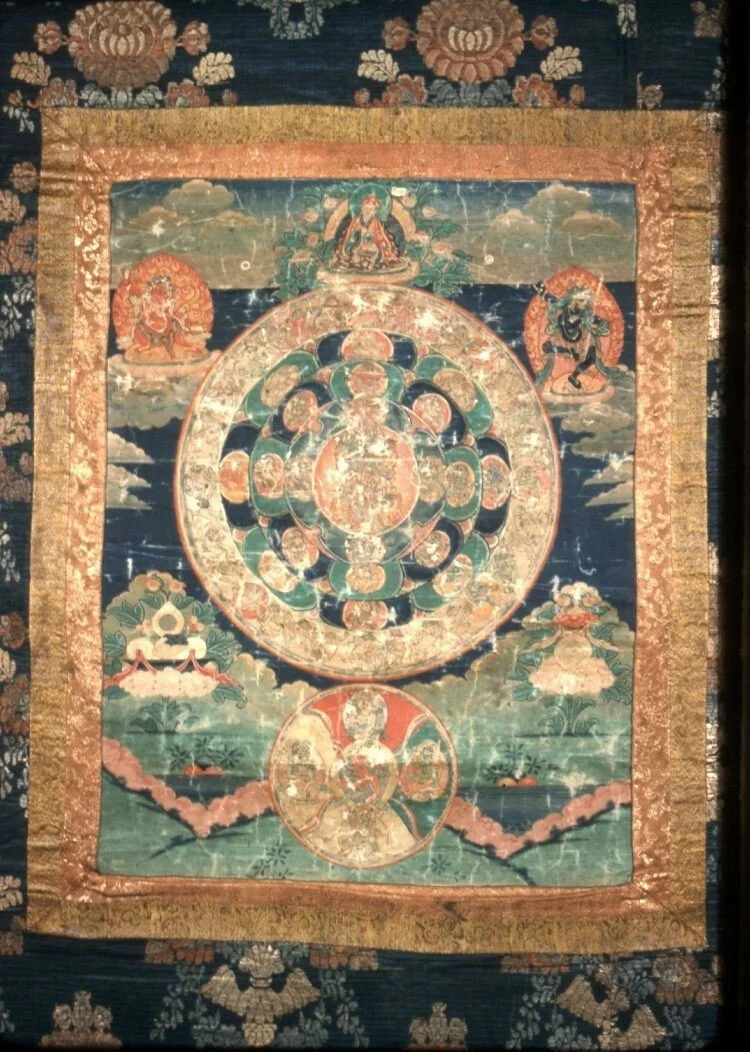
The Net of Magical Display
The name is the teaching. Māyā is magical display: the conjurer's apparition, vivid, functional, and without any substance of its own. Jāla is a net. A net of magical display is therefore the whole of appearance understood as a single, seamless weave in which every knot reflects every other, nothing stands alone, and nothing is anything other than the radiance of the awakened mind. The Tibetans rendered the name sgyu 'phrul drwa ba, “net of magical emanation". Whoever sees the world as this net has, in the language of the cycle, already entered the maṇḍala.
The texts gathered under this name form the scriptural spine of the Nyingma, the Ancient Translation school of Tibet. At their centre stands the Guhyagarbha, the Tantra of the Secret Essence (lit. Womb), which the tradition regards as the single tantra that summarises all the others. Around it are grouped some eighteen further works, each said to unfold one facet of the same revelation: its maṇḍala, its activity, its qualities, its commitments, its empowerment, its display. They are preserved together in the Collected Tantras of the Ancients (rNying ma rgyud 'bum), where they fill two whole volumes and part of a third.
This essay explains what these texts are. It sets out what the Magical Net is, why the Guhyagarbha stands at its heart, where the whole cycle belongs in the Nyingma map of the nine vehicles, how it is read from the summit of the Great Perfection, and why its revelation has never ceased.
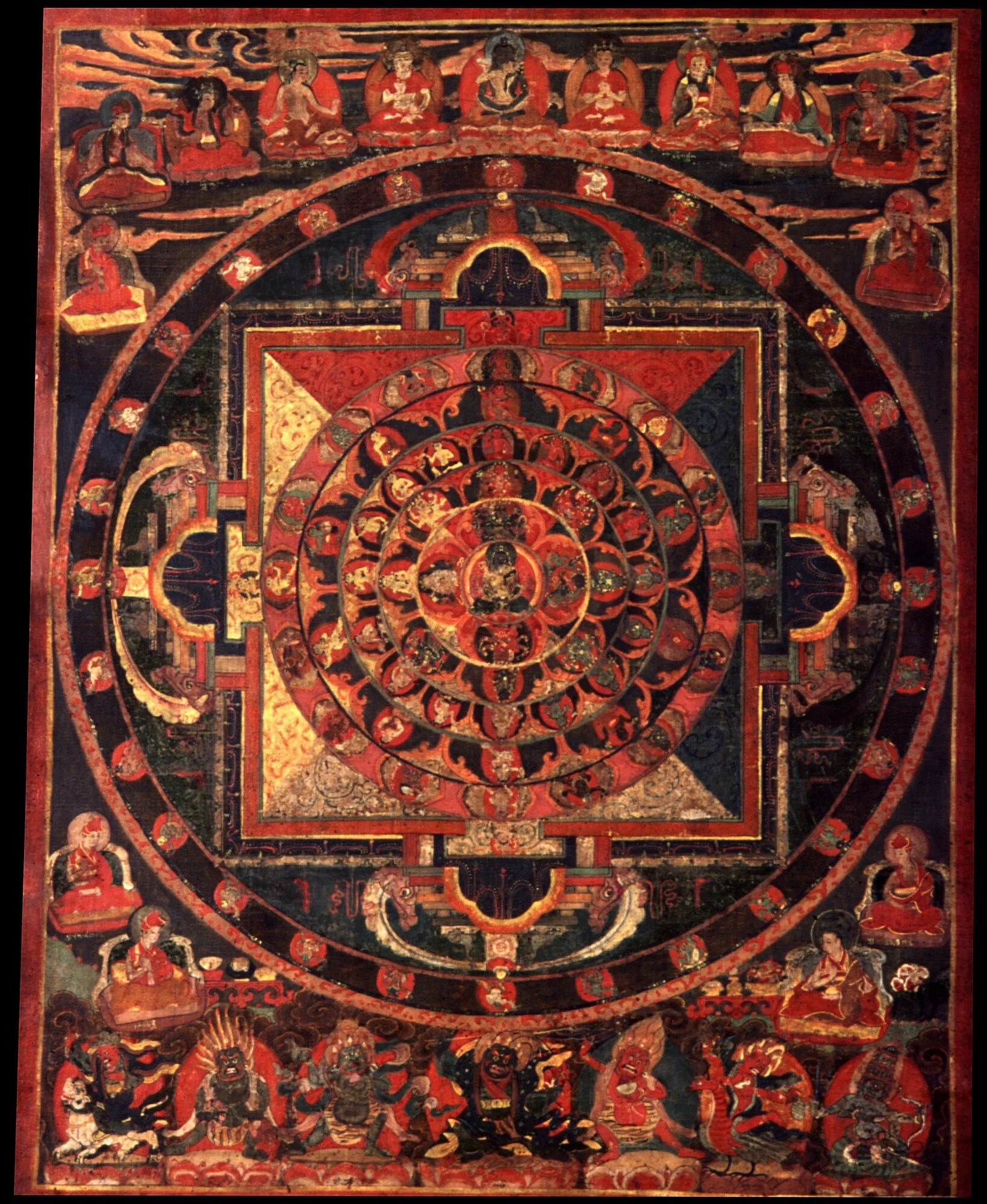
The Magical Net of Light
The great cycle of tantras at the heart of the Nyingma Mahāyoga is called the Māyājāla, the Magical Net, the Magical Matrix. The name is not poetic decoration. It names something that the realised masters actually perceive: that phenomena arise as a net of luminous display, each point reflecting every other point, and that the Vajra-Master who has realised this can consciously weave such a net around himself.
When a genuine Vajra-Master assembles disciples and confers empowerment, he is doing exactly this. From his heart, fine threads of light go out to the heart of each student. From each student, threads return to him and reach across to the others. Over years of practice together, of shared retreat, shared feast, shared hardship and shared joy, these threads multiply until the whole assembly is held within a single luminous fabric. The disciples may not see it. Most of them will never see it. But they feel it: as the peculiar warmth of practising together (or in connection), as the sense that the blessing is stronger in the assembly (or in connection) than alone, as the uncanny way in which one person's breakthrough seems to lift everyone.
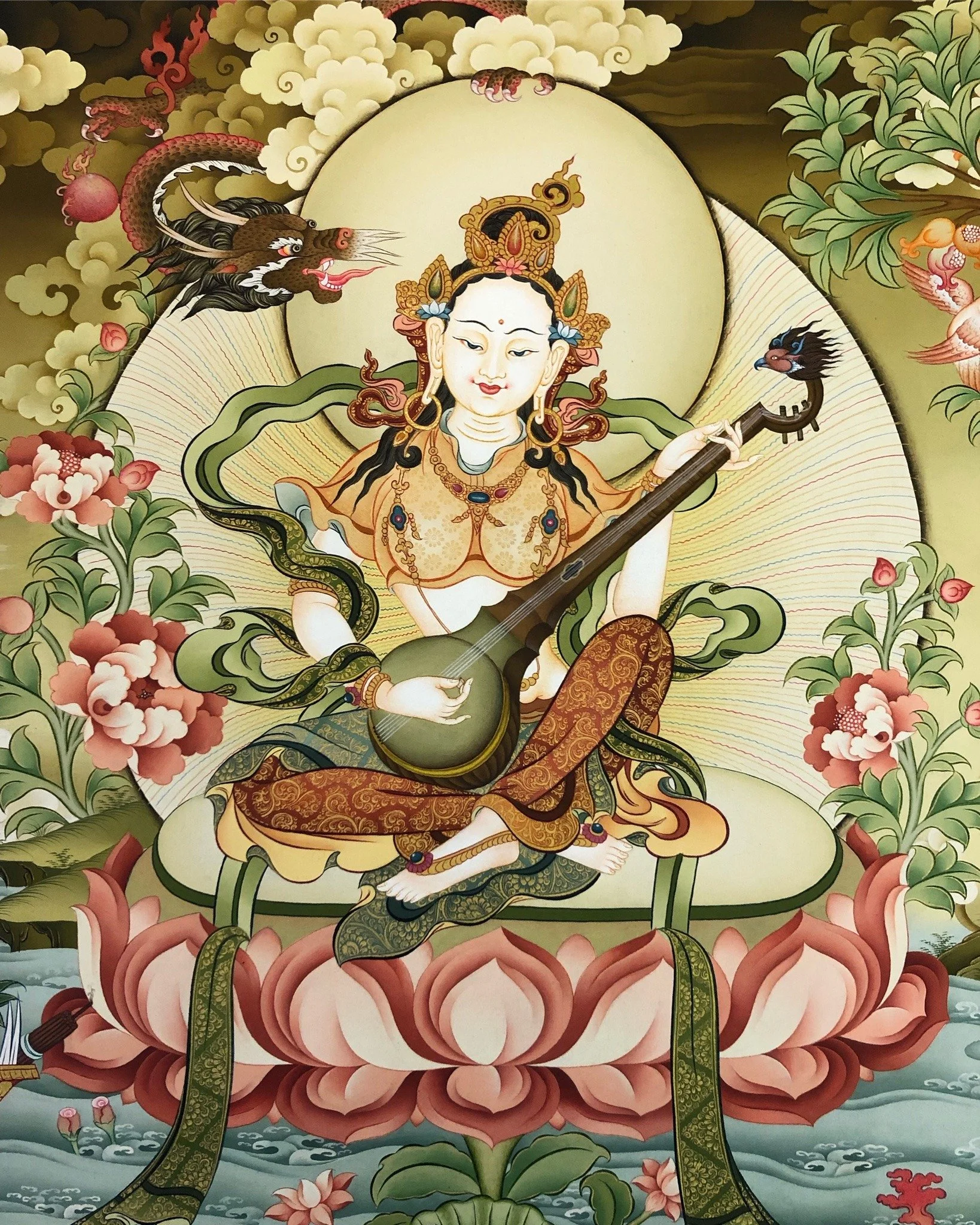
The Rainbow Bridge of Wisdom
Dante reaches the summit of his long climb, watches light differentiate itself into three circles without for one instant ceasing to be a single light, sees one circle reflected in another like rainbow in rainbow, and then, in the very same breath, tells us that speech has failed him utterly. A reader shaped by years inside the Great Perfection meets this passage with a particular and unmistakable shock of recognition — not recognition of doctrine, since the doctrines involved genuinely and importantly differ, but recognition of structure: reality disclosing itself as luminosity rather than concealing itself behind luminosity; multiplicity appearing without any rupture whatsoever in the single ground that displays it; the knower himself transformed rather than merely informed of one further fact; and, at the precise point where the vision is most fully complete, language discovering, with something close to relief, the exact edge of what it was ever built to carry.
None of this proves that Dante secretly knew the Great Perfection, or that the earliest Tibetan masters had somehow inherited a whisper of Plotinus carried across two thousand miles of Central Asian caravan routes, or that Pyrrho returned from the Indus with the whole of the Dharma folded quietly into his travelling case. The honest conclusion is more modest than any of these, and considerably more luminous for being so: that Greek and Indian civilizations stood in sustained, richly documented contact from the archaic period onward, through channels running back at least as far as Pythagoras's own journey to the temples of the Nile; that Greek philosophy itself may have first emerged, at Eleusis, at Elea, in the Pythagorean brotherhood's veiled inner chamber, not from unaided reason working in isolation but from initiates bringing the fruits of their own transformed vision into the new and then-unprecedented form of argument and dialogue.
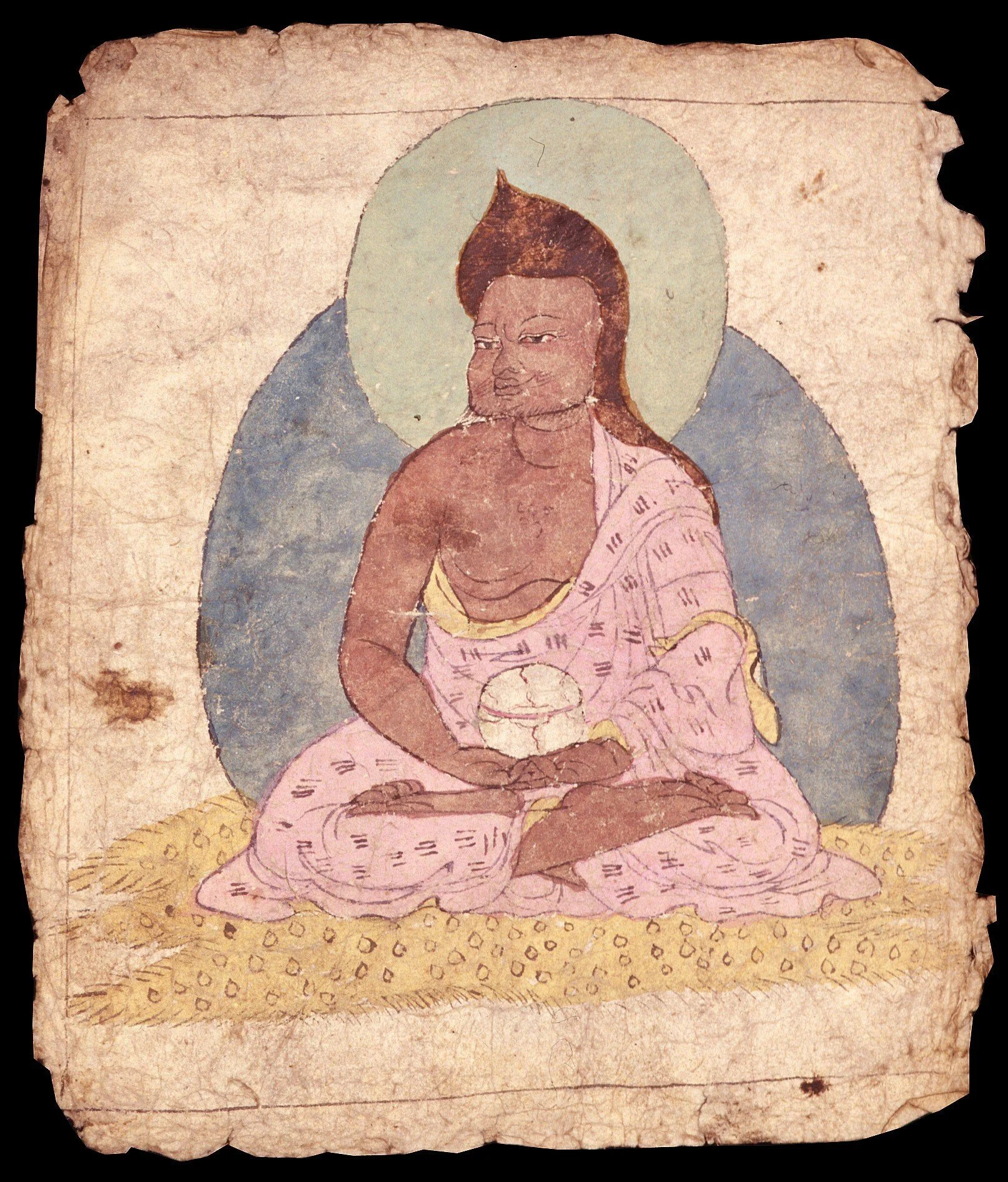
The Ground That Was Never Hidden
The Luminous Great Perfection calls it rang rig, from the Sanskrit svasaṃvedana: self-knowing, self-awareness, the knowledge that knows itself. The tradition speaks of it in three ways. As the ground, it is what we are before anything was ever gained or lost. As the path, it is that same knowing recognised, and the recognition sustained until it no longer wavers. As the fruit, it is that same knowing wholly unveiled, radiant through every appearance, with nothing left over.
These are not three things. They are one knowing, seen from within ignorance, seen in the moment of recognition, and seen when there is no longer anyone apart from it to see. Jigme Lingpa ends his Prayer of the Ground, Path and Fruition with an aspiration that all beings might seize the throne of the majestic fruit. A throne is not built. It is taken by the one to whom it has always belonged.
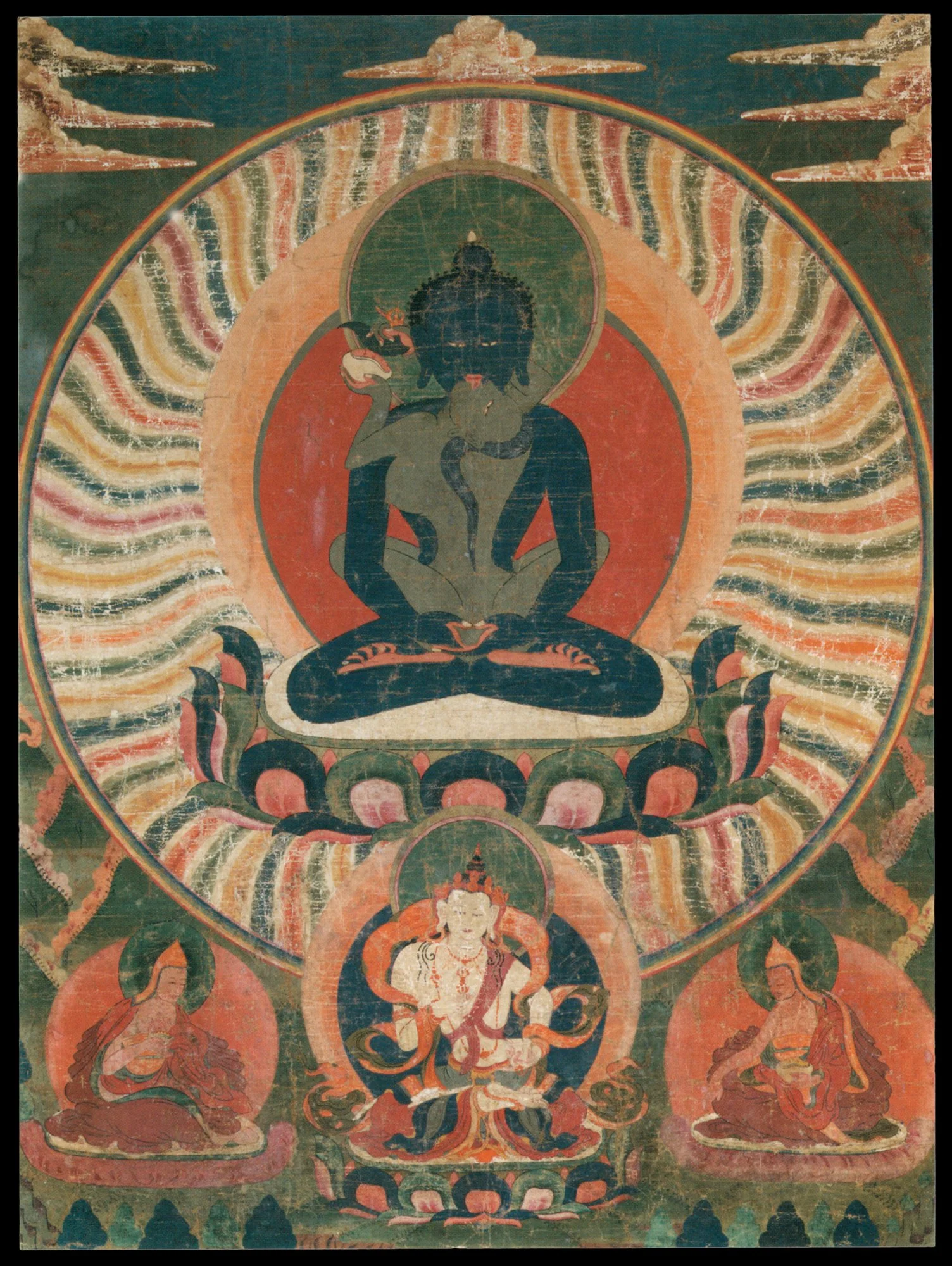
The Clouds of Samantabhadra
There is a single name that stands at both ends of the Buddhist path as it came to be lived in Tibet. At the beginning of practice it is the name of a bodhisattva, the “eldest son of all the Victors," whose aspiration every novice learns to recite. At the end it is the name given to the ground itself: the primordial Buddha, kun tu bzang po, who never wandered and was never liberated because there was never anything from which to be liberated. Between these two stands a third figure, less often noticed: the Buddha of the early lexicographers, whom a fifth-century Sanskrit thesaurus simply calls samantabhadro bhagavān, “the Blessed One who is good in every respect."
This essay argues that these are not three figures who happen to share a name, nor one figure who “evolved" through historical stages. They are three angles of one disclosure. The bodhisattva's conduct (caryā), the Buddha's epithet, and the Ādibuddha's ground converge on a single intuition: that goodness which is samanta, “on every side," leaves nothing outside it. The Bhadracarī is where that intuition first became a practice, and the “offering clouds of Samantabhadra" (kun tu bzang po'i mchod sprin) are where the practice still breathes, in every Tibetan liturgy from the simplest daily recitation to the Dzogchen treasures.
The argument proceeds in seven movements. The first examines the text and its name. The second recovers the Buddha as Samantabhadra. The third traces how the prayer's opening twelve verses became the skeleton of Mahāyāna worship, and what preceded them. The fourth follows Samantabhadra into Secret Mantra, where he becomes Vajrasattva. The fifth studies the offering clouds and their sources. The sixth enters the maṇḍala of the Peaceful and Wrathful. The seventh arrives at Dzogchen, where the two Samantabhadras meet in two aspirations that mirror each other across a thousand years.
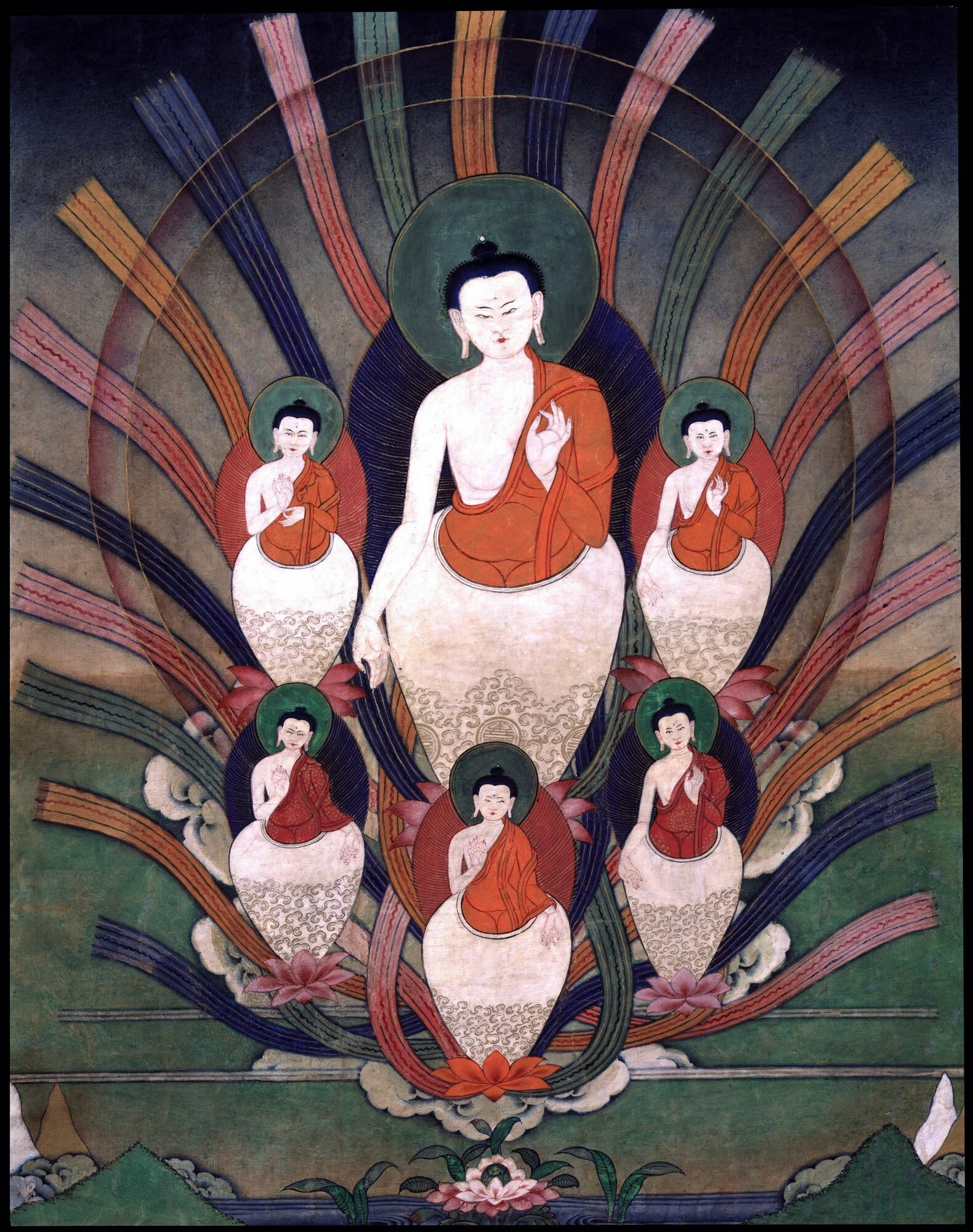
Stillness and Movement: The Subtle Body Physiology of Kadag and Lhündrub
There is a specific and very common way that sincere Dzogchen practice can go subtly wrong without ever announcing itself as wrong. A practitioner sits, the mind settles, thoughts thin out, and in that settled clarity something is recognised — spacious, clear, unfabricated, free of the usual grasping. It feels, correctly, like an encounter with something real. And then the session ends, the day resumes, a colleague says something irritating, a desire flares, a fear takes hold — and the very same practitioner, now caught in the middle of an ordinary human moment, quietly concludes that they have lost what they had. Rigpa, on this unexamined assumption, was the quiet room. Movement is what happens when you leave it.
This essay exists to name that assumption directly and to show, from within the tradition's own root texts and living oral transmission, that it is a misunderstanding serious enough to eventually stall a practitioner's entire path — not because stillness is the wrong door (it is, for nearly everyone, the first door, and rightly so), but because mistaking that first door for the whole house quietly converts the Great Perfection back into an unusually refined form of śamatha (Tib. ཞི་གནས་, shiné). The Natural State is not more true when the mind is quiet than when it is moving. It is recognised more easily in quiet, for reasons this essay will explain precisely — but its actual nature includes the storm as fully as it includes the stillness, and a practitioner who has never learned to recognise it during the storm has only received half of what Dzogchen actually transmits.
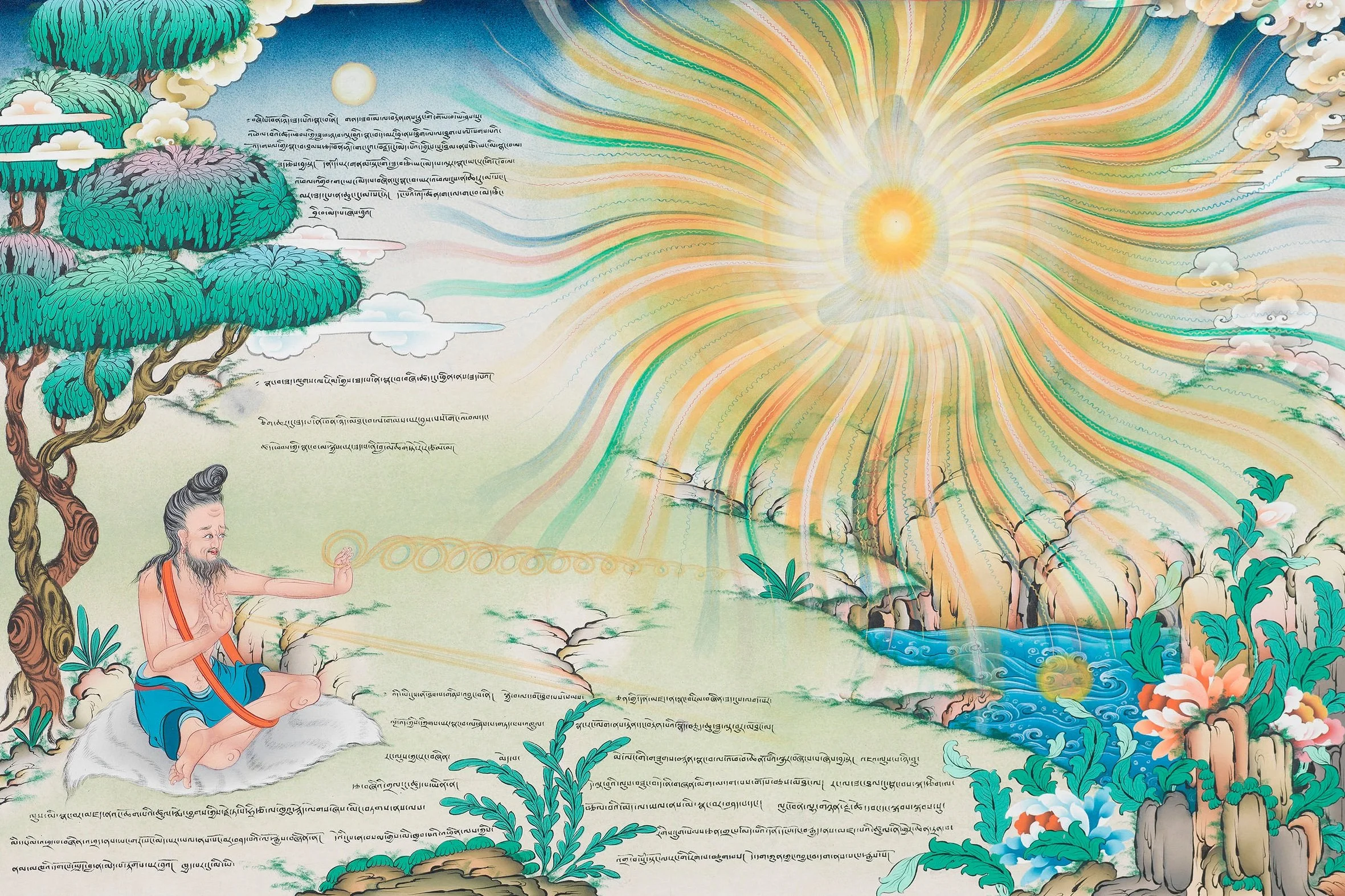
The Wind That Rides the Mind
There is a peculiar cruelty built into the early years of Dzogchen practice, one that almost every serious Dzogchenpa eventually collides with and few are warned about in advance: the harder one tries to be calm, the more elusive calm becomes. This is not a failure of devotion, nor a sign of insufficient merit, nor evidence that one is somehow constitutionally unsuited to the path. It is, as this essay will show, a physiological law as exact and as impersonal as any studied by a physician — and the tradition that names it most precisely is not a philosophical school at all, but medicine: Tibetan medicine's rGyud bzhi, the Four Tantras, together with the completion-stage physiology of the higher tantras that inherits its categories.
For the Dzogchenpa this is not merely a cautionary medical footnote. The path meant to still the mind, pursued with the wrong hand on the reins, generates exactly the restlessness it was meant to cure. It is, read carefully, one of the clearest external confirmations available anywhere in the Buddhist sciences of the Great Perfection's own central and most counterintuitive claim: that effort, at a certain depth, is not neutral fuel that can be pointed at any goal including peace, but is itself already a disturbance, indistinguishable at the level of the subtle body from the very agitation it is seeking to extinguish. What follows is an attempt to trace this single insight across three registers that rarely appear together in one place — the clinical vocabulary of the Tibetan physician, the completion-stage vocabulary of Anuttarayoga tantra, and finally the proprietary, and in crucial respects strikingly different, physiology of Dzogchen's own Upadeśa tradition — before arriving at what the Great Perfection actually offers in place of correction: not a better technique for gathering a scattered wind, but the recognition that it was never anywhere else to be gathered from.
Śāntideva’s cat
There are verses in the Buddhist canon so unassuming in their surface content that a reader can pass through them without breaking stride, and it is worth pausing on exactly what is easy to miss in Bodhisattvacaryāvatāra 5.73. Śāntideva has spent the preceding fifty verses of his fifth chapter constructing one of the most rigorous psychological arguments in Buddhist literature — the case for guarding all-round introspective awareness (samprajanya) as the precondition for any meditative (or ethical) progress whatsoever. And then, in the midst of a run of practical instructions about how a monk should move through a room, he writes: “The heron, the cat, and the thief — moving silently, gently, and stealthily — accomplish what they intend; thus should the sage always conduct himself.”
Read quickly, this is a piece of monastic etiquette: don't slam doors, don't scrape chairs, be considerate of others' concentration. Read slowly, and cross-referenced against the full arc of later Buddhist literature that this essay will trace, it turns out to be something considerably more feline and more important: the first appearance, in explicitly stated form, of a principle that later tradition — first in Tibetan medicine, then in tantric physiology, then in the Great Perfection's own account of its method — will elevate from a rule of bodily conduct into nothing less than the operative technology of awakening itself. The cat, it turns out, was never just an example of good manners. It was the seed of an entire doctrine about the relationship between force and realisation, planted in the eighth century and not fully flowering until Longchenpa's fourteenth-century masterwork gave it a name: ngal gso, reposing.
This essay traces that flowering across four registers — the ethical, the psychological, the medical-physiological, and the properly Dzogchen — and argues that they are not four different ideas loosely associated by theme, but a single insight, discovered independently and confirmed repeatedly, at every depth Buddhist contemplative wisdom has ever probed.
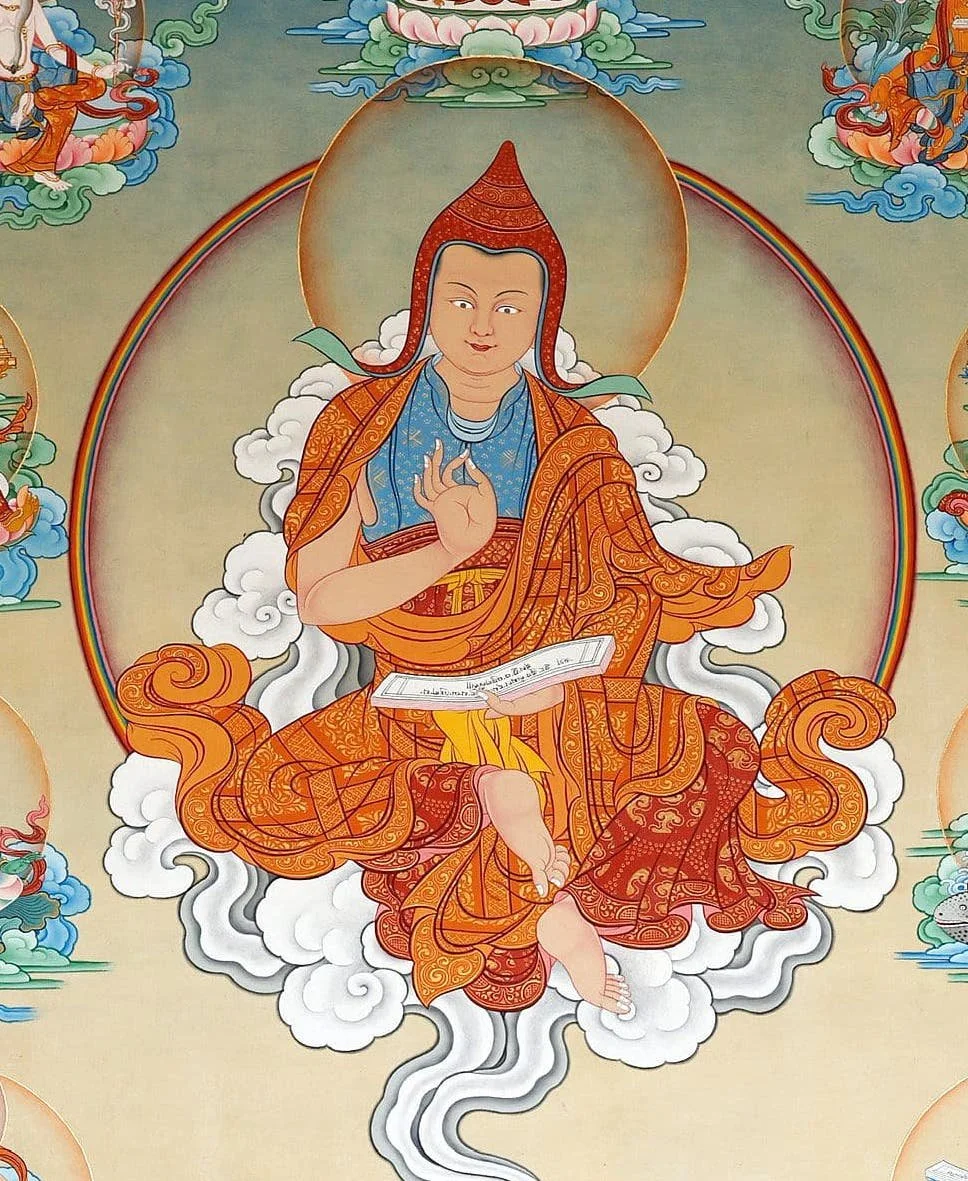
Ngöndro as Condensed Bodhisattvacaryāvatāra
Read closely against Śāntideva's Bodhisattvacaryāvatāra — and, in the case of this essay, read against it using two primary witnesses of a single living lineage, the Ösel Nyingthig’s Ḍākinī Ngöndro: The Excellent Path of Great Bliss revealed by the Tertön Gyurmed Ngakrabtsal, together with an oral commentary on the closely parallel Longchen Nyingthig Ngöndro — the ten chapters of the Bodhicaryāvatāra turn out to correspond, section by section and at points phrase by phrase, to the sequence of the Ngöndro. This is not, so far as I have been able to determine, a correspondence that appears in the secondary literature under this description. It may simply be that it is well known within the halls of shedras and has never been written down for a scholarly readership; if so, this essay will have rediscovered rather than discovered. But the correspondence is close enough, and grounded enough in the primary texts, to be worth setting out in full, together with an argument about what it implies for the historical relationship between Śāntideva's text, Atīśa's Bodhipathapradīpa, and the Dzogchen foundational practice genre as it matured in Tibet.
Where Are the Adults?
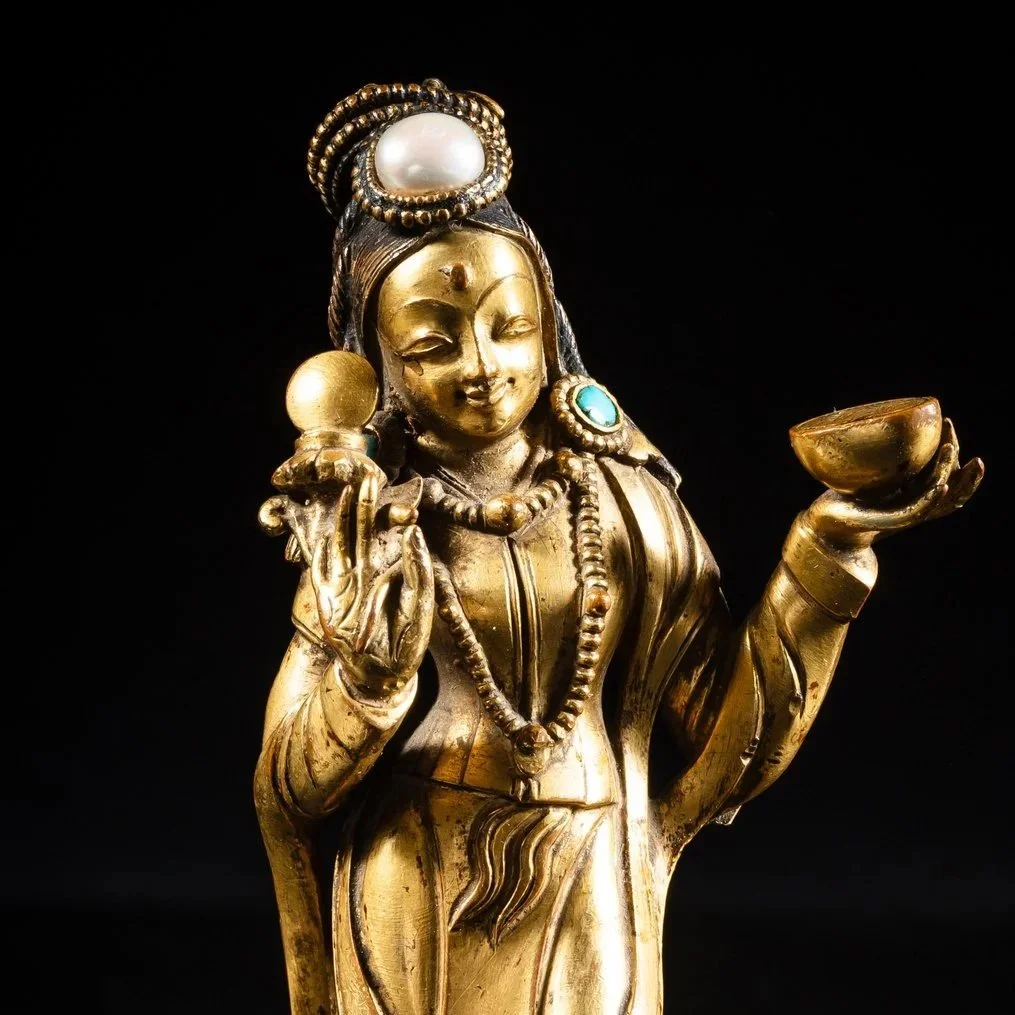
Garab Dorje, the first human to hold the Dzogchen transmission, received the whole of it directly from Vajrasattva while still a child, and by around age seven was already confident enough to insist on debating seven senior paṇḍitas who had traveled from Bodhgayā to examine him. He won. His very name, Prahevajra, means something like Intense Diamond — and the texts don't apologise for his age or explain it away. They treat his depth and his childhood as belonging together, as though one were simply the visible shape of the other.
Guru Padmasambhava takes this further, because his youth isn't confined to an origin story you read once and set aside. In his form as Tsokyé Dorje, the Lake-Born Vajra, he is the central figure of the Ngöndro — recited daily, not remembered occasionally — and the liturgy is exact: he is to be seen as youthful as an eight-year-old boy, glowing white with a blush of red, seated in royal ease. This is not “he once was." It is present tense, renewed with every recitation, forever eight.
And the pattern doesn't stop with the founders — it's built into how the lineage keeps transmitting itself. Dudjom Lingpa's visionary account, the Nang Jang, describes fourteen realised masters appearing to teach him directly, Longchenpa among them: knowledge passed not through institutions but through living contact with teachers who do not arrive as old men, but mysteriously, in the form of luminous children.
The Land That Flew: In Search of Oḍḍiyāna
The first traveller is a Chinese Mahayana monk, ill and homesick. It is the spring of 520, and Song Yun has come over the iron-chain bridges of the Hindu Kush into the country his records call U-chang. The valley is at its loveliest: birdsong, butterflies over the flowers, evergreen trees in a mild climate. All of it makes him ache for China, and he falls seriously ill. After a month he finds relief by obtaining charms from the locals. He is a Buddhist and an imperial envoy, and he has been healed by a spell.
The second traveller is the Kashmiri pilgrim Jñānanetra, or so tradition says, in the middle of the ninth century. He walks into a cremation ground called Karavīra and stays there, worshipping and waiting, until the Goddess reveals herself. She comes as Maṅgalā, “the Auspicious One", surrounded by a retinue of yoginīs. Out of that encounter comes a whole Kashmiri Śaiva tantric theology of the Goddess: the Krama system. Its scripture places the place of revelation in the northern quarter, a great seat called Oḍḍiyāna, frequented by Siddhas and yoginīs.
The third traveller is a Tibetan, Orgyenpa Rinchen Pal (1230–1309). He arrives in the same valley after Buddhism there had all but vanished. He reaches Dhumathala, which he calls the heart of Uḍḍiyāna, and finds a self-born sandalwood image of the goddess Maṅgaladevī. He weeps, and he writes a guidebook that Tibetans use for centuries.
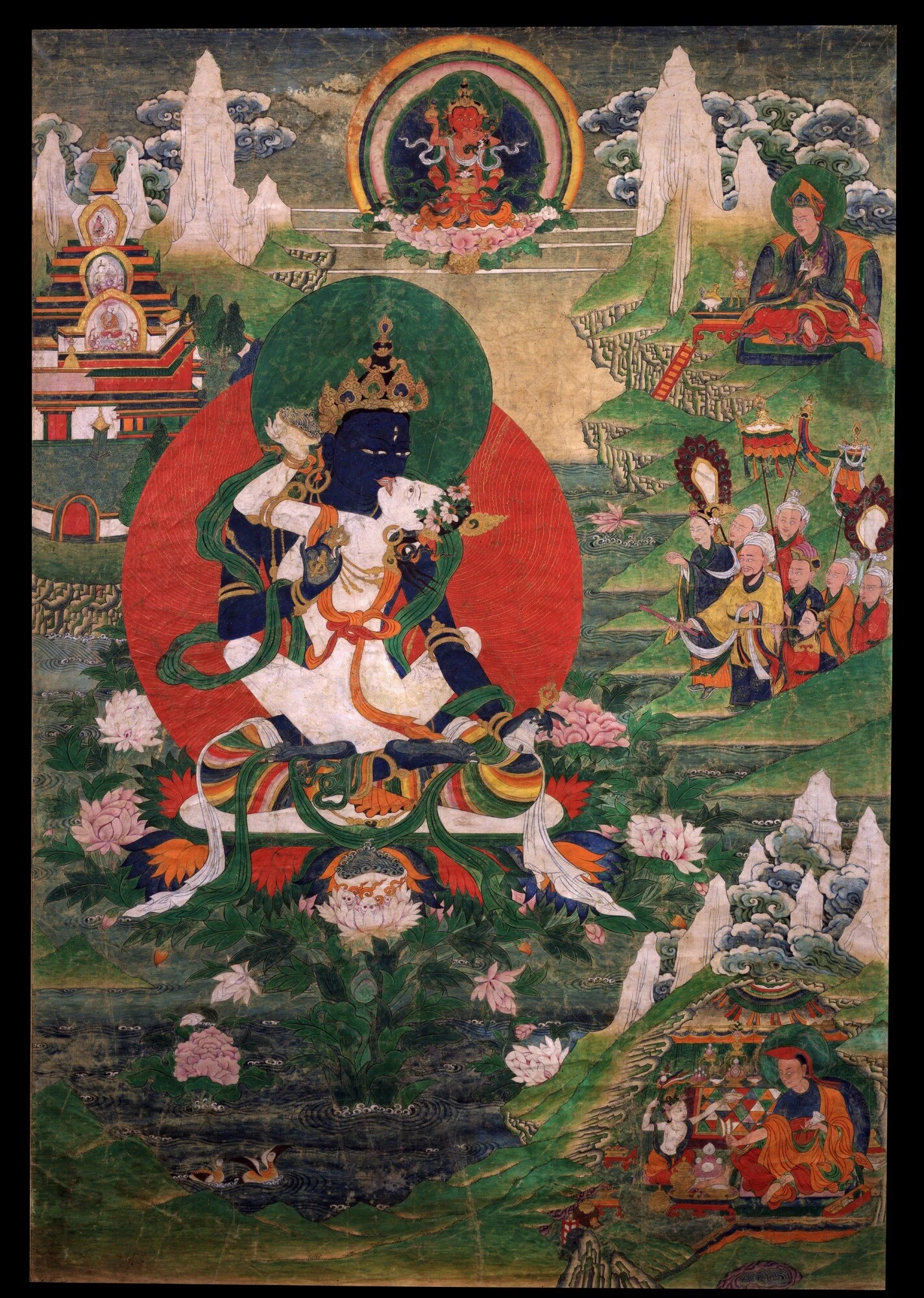
The three are separated by seven centuries and three civilizations, and they are looking for the same place. That place is the subject of this essay. Our Guru Padmasambhava is said to have been born there. It is called the Land of the Ḍākinīs and the source of the yoginī tantras. For Kashmiri Śaivas it is the Northern Seat, and for Śrīvidyā it is the central bindu at which the Goddess Mahātripurasundarī — the Great Beauty of All the Three Worlds — herself sits in the eternal embrace of Kāmeśvara, the Lord of Love. Yet where Oḍḍiyāna was has been contested for a century. Some Tibetan teachers now put it in Odisha, on the opposite side of the subcontinent.
My argument, in brief, is that Oḍḍiyāna was a real valley: the Swat valley of northern Pakistan and the hill country around it. It was then turned, by pilgrims, poets and tantric authors, into something that could float. Both halves of that sentence matter. The valley explains why the name attached to the north-west. The floating explains why it could later be found elsewhere.
Animal-Headed Beings at the Threshold
On the Tramenma of the bardo, the Zhitro deities, Anubis, Nana, and the mind’s own instinct at the edge of death
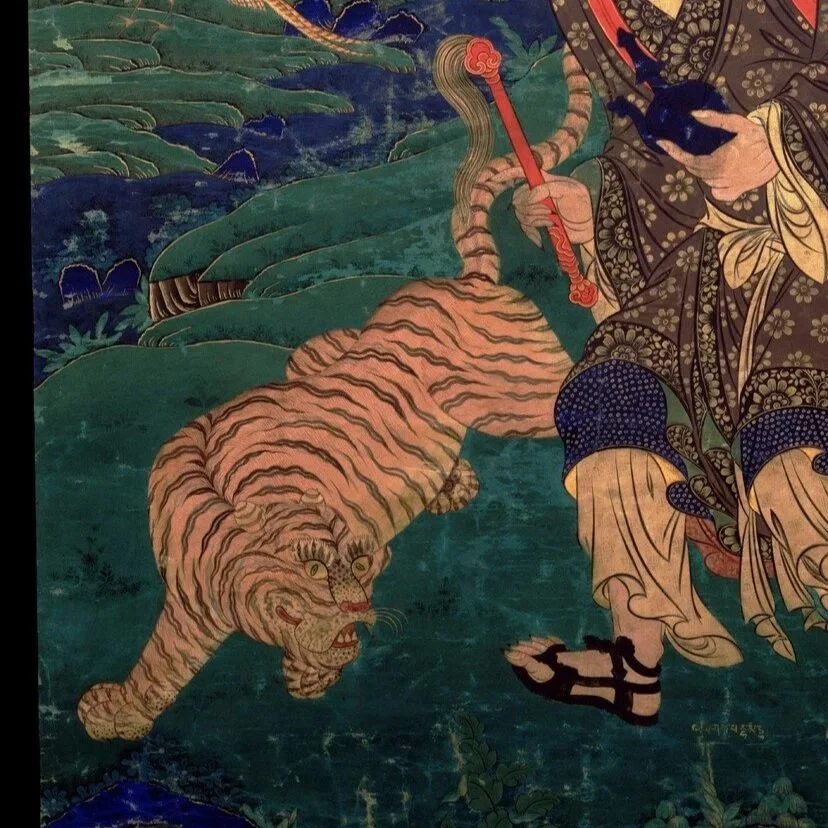
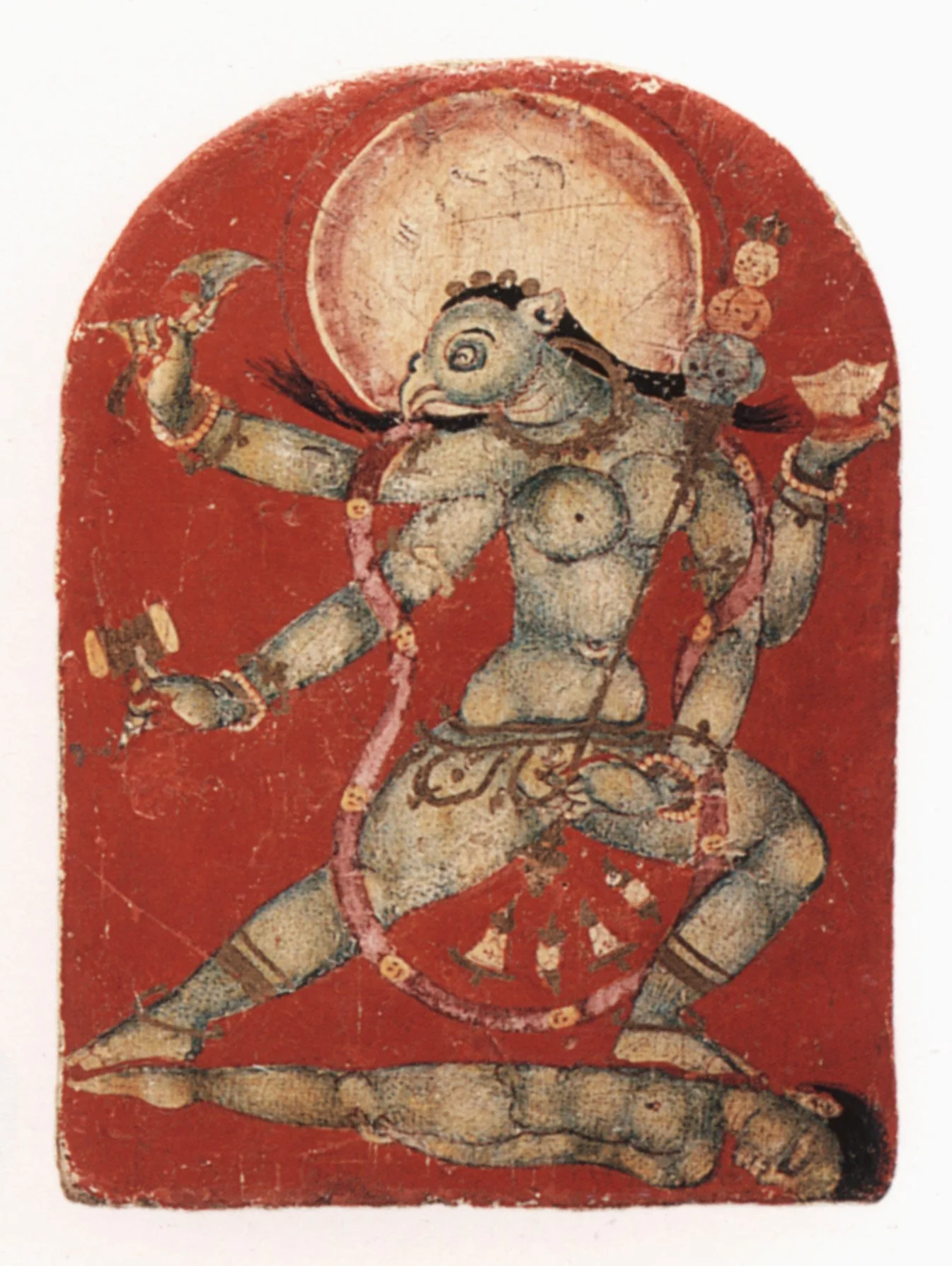
There's a moment that stops most careful readers of the Bardo Thödol cold: the eight Tramenma, the animal-headed dakinis, arriving in procession to greet — or rather, to test — the wandering consciousness of the newly dead. A lion-faced dakini roaring the discursive mind into silence. A tiger-headed, a bear-headed, a wolf-headed figure, each one a category of ordinary perception turned luminous and terrible. And anyone who has also stood before an Egyptian funerary papyrus knows the same jolt of recognition: Anubis, jackal-headed, weighing the heart against the feather of Ma'at while the beasts of judgment look on.
Two entirely separate civilizations, unconnected by any obvious road, both staring at death and both reaching, instinctively, for the same grammar: the human body, crowned with the head of an animal, standing at the threshold.